
Tom Heritage-Barker

Founder TEST Creative

Build fast. But build it right.
Apr 2, 2026

What AI tools mean for SMEs — and why a proof of concept is just the beginning.

Tom Heritage-Barker

Founder TEST Creative

Build fast. But build it right.

Apr 2, 2026

What AI tools mean for SMEs — and why a proof of concept is just the beginning.

Build fast. But build it right.

Something has genuinely changed. The barrier to building custom digital tools — the kind that used to require a development agency, a five-figure budget, and months of back-and-forth — has effectively collapsed for SMEs.

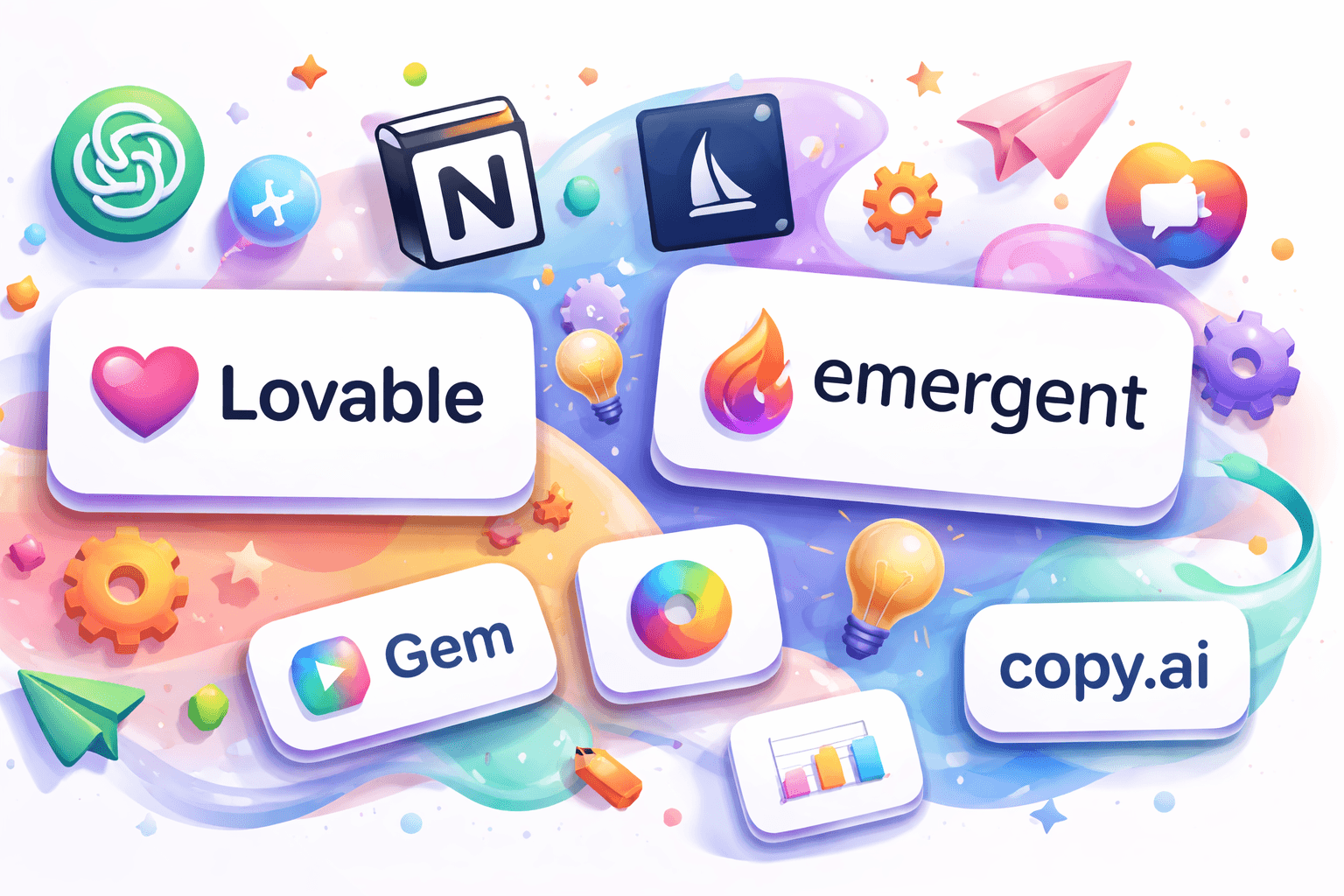
Platforms like Lovable and Emergent now let non-technical founders and teams build working prototypes in hours and days. You can describe what you need, see it take shape in real time, and have something to show colleagues, investors, or customers almost immediately.

That is a real shift, and it matters. But it comes with a caveat that's worth understanding before you start.


Deploying something is not the same as owning it.

The opportunity is real

Let's be clear: we're not here to pour cold water on these tools. They are genuinely powerful, and for SMEs they open up a category of rapid development that simply wasn't accessible before.

The ability to validate an idea cheaply, demonstrate a concept to stakeholders, or test a workflow before committing to full development — that's valuable in a way that changes how businesses can approach building.

A few years ago, exploring whether a tool could solve a particular internal problem meant commissioning an agency and hoping the brief was good enough. Now you can have a working version in front of your team inside a week.

What we saw this week

We had a conversation this week with an existing client that illustrated exactly how this should work.

They'd used one of these platforms to build a proof of concept — a working prototype that demonstrated the core of what they were trying to achieve. It was genuinely impressive. Fast, functional, and clear about the problem it was solving.

But they were also clear-eyed about what they had. They recognised that a POC built quickly on an AI platform is a starting point. It's a demonstration, not a finished product. So rather than pushing it further than it was built to go, they made the call to bring in experienced development resource to take it properly into production.


That's exactly the right model. And it's rarer than it should be.

Where things go wrong

The mistake isn't using AI build tools. The mistake is assuming the prototype is the finish line.

There's a meaningful gap between 'we built something that works in a demo' and 'we have something that's maintainable, secure, scalable, and ready to run at real-world volume.' Bridging that gap requires a different kind of thinking — and usually, a different kind of expertise.

Some of the questions that rarely get asked early enough:

What happens when something breaks — and there's no developer on the team?

How does this connect to your existing systems and data?

Who owns the codebase, and can anyone else read it?

What does this cost to run at scale — and who manages that?

These aren't reasons not to build. They're reasons to build with the right support around you.

Two routes worth understanding

Whether a tool is intended for external customers or internal use changes what 'production-ready' means — but it doesn't change the need to get there properly.

For external deployment, the bar is higher: performance under load, data security, user experience at scale, and the infrastructure to support people who don't work for you. Getting this wrong is visible, and the cost of fixing it in public is higher than the cost of getting it right first.

For internal tools, the stakes can feel lower — but they often aren't. Operational dependencies on tools that aren't maintained, understood, or secure create their own category of risk. The tool that nobody knows how to fix is a vulnerability.

In both cases, the value of building fast is real. The question is what comes next.

Where Test Creative fits

We work with SMEs at exactly this intersection — not as an alternative to AI build tools, but as the context around them.

That means helping clients understand what they've actually built, what it would take to take it further, and the most appropriate route to get there — whether that's external deployment, internal rollout, or something in between.

We're not the voice telling you not to explore these platforms. We're the people who help you understand what you're looking at when you do, and what the right next steps are before you commit.


AI lowers the cost of building. It doesn't lower the cost of getting it wrong.

If you've built something and you're not sure what to do next

That's a good place to start a conversation. We talk to SMEs who have prototypes they're excited about but uncertain how to progress, businesses exploring whether a custom tool could solve an operational problem, and founders who want to move fast without building on unstable ground.

If any of that sounds familiar, get in touch.

Build fast. But build it right.

Something has genuinely changed. The barrier to building custom digital tools — the kind that used to require a development agency, a five-figure budget, and months of back-and-forth — has effectively collapsed for SMEs.

Platforms like Lovable and Emergent now let non-technical founders and teams build working prototypes in hours and days. You can describe what you need, see it take shape in real time, and have something to show colleagues, investors, or customers almost immediately.

That is a real shift, and it matters. But it comes with a caveat that's worth understanding before you start.


Deploying something is not the same as owning it.

The opportunity is real

Let's be clear: we're not here to pour cold water on these tools. They are genuinely powerful, and for SMEs they open up a category of rapid development that simply wasn't accessible before.

The ability to validate an idea cheaply, demonstrate a concept to stakeholders, or test a workflow before committing to full development — that's valuable in a way that changes how businesses can approach building.

A few years ago, exploring whether a tool could solve a particular internal problem meant commissioning an agency and hoping the brief was good enough. Now you can have a working version in front of your team inside a week.

What we saw this week

We had a conversation this week with an existing client that illustrated exactly how this should work.

They'd used one of these platforms to build a proof of concept — a working prototype that demonstrated the core of what they were trying to achieve. It was genuinely impressive. Fast, functional, and clear about the problem it was solving.

But they were also clear-eyed about what they had. They recognised that a POC built quickly on an AI platform is a starting point. It's a demonstration, not a finished product. So rather than pushing it further than it was built to go, they made the call to bring in experienced development resource to take it properly into production.


That's exactly the right model. And it's rarer than it should be.

Where things go wrong

The mistake isn't using AI build tools. The mistake is assuming the prototype is the finish line.

There's a meaningful gap between 'we built something that works in a demo' and 'we have something that's maintainable, secure, scalable, and ready to run at real-world volume.' Bridging that gap requires a different kind of thinking — and usually, a different kind of expertise.

Some of the questions that rarely get asked early enough:

What happens when something breaks — and there's no developer on the team?

How does this connect to your existing systems and data?

Who owns the codebase, and can anyone else read it?

What does this cost to run at scale — and who manages that?

These aren't reasons not to build. They're reasons to build with the right support around you.

Two routes worth understanding

Whether a tool is intended for external customers or internal use changes what 'production-ready' means — but it doesn't change the need to get there properly.

For external deployment, the bar is higher: performance under load, data security, user experience at scale, and the infrastructure to support people who don't work for you. Getting this wrong is visible, and the cost of fixing it in public is higher than the cost of getting it right first.

For internal tools, the stakes can feel lower — but they often aren't. Operational dependencies on tools that aren't maintained, understood, or secure create their own category of risk. The tool that nobody knows how to fix is a vulnerability.

In both cases, the value of building fast is real. The question is what comes next.

Where Test Creative fits

We work with SMEs at exactly this intersection — not as an alternative to AI build tools, but as the context around them.

That means helping clients understand what they've actually built, what it would take to take it further, and the most appropriate route to get there — whether that's external deployment, internal rollout, or something in between.

We're not the voice telling you not to explore these platforms. We're the people who help you understand what you're looking at when you do, and what the right next steps are before you commit.


AI lowers the cost of building. It doesn't lower the cost of getting it wrong.

If you've built something and you're not sure what to do next

That's a good place to start a conversation. We talk to SMEs who have prototypes they're excited about but uncertain how to progress, businesses exploring whether a custom tool could solve an operational problem, and founders who want to move fast without building on unstable ground.

If any of that sounds familiar, get in touch.

Let’s bring your vision to life

We believe that every business has a story to tell. We help our clients bring their story to life.

Get in touch today.

Extreme close-up black and white photograph of a human eye

Contact us

Let’s bring your vision to life

We believe that every business has a story to tell. We help our clients bring their story to life.

Get in touch today.

Extreme close-up black and white photograph of a human eye

Contact us

Let’s bring your vision to life

We believe that every business has a story to tell. We help our clients bring their story to life.

Get in touch today.

Extreme close-up black and white photograph of a human eye

Contact us